
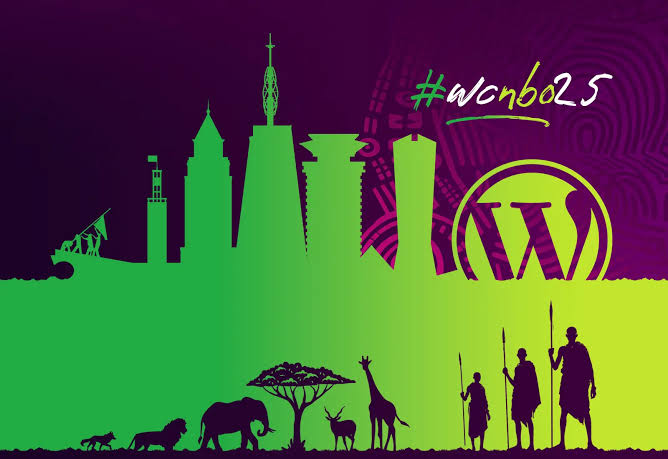
Nairobi has developed a peculiar relationship with websites. Almost every serious business is expected to have one, yet the actual thinking that goes into building and maintaining those websites is often far less sophisticated than the technology now allows. A company can have an impressive logo, a carefully designed social media presence and a professional office, but its website may still be little more than a collection of static pages that tells visitors what the company does and gives them a phone number to call. That approach may have been acceptable when having a website was itself a competitive advantage. It is becoming increasingly difficult to justify now that customers use websites to research businesses, compare products, make enquiries, request quotations, book services, make payments and decide whether a company appears credible enough to deal with.
This is one of the reasons WordPress has become so important in Nairobi. The platform occupies an unusually useful position between affordability and capability. A small Kenyan business does not necessarily need to commission a software engineering team to build a content management system from scratch, while a more established organisation can use WordPress as the foundation for something considerably more sophisticated than a conventional corporate website. The same ecosystem can support a law firm publishing legal resources, a real estate company displaying hundreds of properties, a retailer selling products through WooCommerce, a school generating admission enquiries, a consultancy publishing research or a service business turning its website into an actual lead-generation system.
But there is an important problem underneath this growth. Nairobi does not have a shortage of people who can build something in WordPress. It has a shortage of people who understand what they are actually building.
That distinction is going to become increasingly important.
Nairobi Does Not Really Have a WordPress Problem; It Has a Web Development Quality Problem
WordPress is frequently blamed when a website becomes slow, insecure, difficult to update or impossible to modify without breaking something. In many cases, however, WordPress is not the real problem. The problem is the way WordPress was implemented.
The platform is remarkably flexible, which means it can be used well or badly. A developer can build a lean website with a sensible theme architecture, carefully selected plugins, optimised media, appropriate caching and a hosting environment that matches the expected traffic. The same developer, or another one, can install a multipurpose theme containing hundreds of unnecessary features, add a page builder, install a plugin for every individual requirement, upload enormous images directly from a phone and then put the whole thing on the cheapest hosting package available. Both websites are technically “WordPress websites.” Their long-term performance, security and maintainability will be completely different.
This is where the Nairobi market becomes interesting.
The relatively low barrier to entry has made WordPress accessible to thousands of freelancers and small agencies. That accessibility is valuable because it allows businesses that could never afford a custom software project to get online. At the same time, it has created a market in which the visual result of a website is often valued more highly than the architecture underneath it. If the homepage looks good in a presentation, the project can be considered successful even when the underlying website is slow, difficult to maintain or dependent on a collection of components nobody has properly evaluated.
The customer may not discover the problem immediately. In fact, the website might work perfectly on the day it is launched. The problems often appear six months later, when plugins need updating, a payment integration changes, the hosting account reaches its limits, a developer disappears, or the business asks for functionality that the original implementation was never designed to accommodate.
That is why the quality of a WordPress website cannot be judged solely by looking at the homepage.
The real question is what happens after launch.
The Cheapest Website Can Become the Most Expensive Website
There is nothing inherently wrong with a business looking for an affordable website. Nairobi is a price-sensitive market, and any discussion about web development that ignores the financial realities of Kenyan SMEs is disconnected from reality. A small business may genuinely not have hundreds of thousands of shillings available for a digital project, and WordPress is valuable precisely because it allows that business to acquire useful technology without assuming the cost structure of a large software project.
The problem begins when the industry confuses a low price with a low total cost.
A website that costs KSh 40,000 to build but requires frequent repairs, cannot be safely updated and needs to be rebuilt every two years may be considerably more expensive than a KSh 100,000 website that is properly structured and maintained. The initial invoice tells only a small part of the story. Businesses should also consider hosting, domain ownership, maintenance, security, backups, content updates, plugin licences, performance optimisation, integrations and the cost of future development.
This is particularly important when a website is connected to revenue.
If a company’s website is merely an online brochure, downtime may be embarrassing but relatively manageable. If the website receives enquiries, sells products, accepts bookings or processes payments, downtime becomes a business interruption. A slow checkout can mean lost sales. A broken enquiry form can mean lost leads. An expired plugin licence can disable functionality. A compromised administrator account can turn a digital asset into a security incident.
The cheapest development decision is therefore not necessarily the cheapest business decision.
For Kenyan businesses, the more useful question is not simply, “How much will you charge me for a WordPress website?” It is, “How much will this website cost me to own, operate and improve over the next three to five years?”
That question immediately changes the quality of the conversation between the business owner and developer.
The Kenyan Customer Changes How a Website Should Be Built
A generic WordPress tutorial written for an American audience cannot automatically be applied to a Nairobi business and expected to produce the best possible digital experience.
The Kenyan market has its own behaviour.
Mobile phones dominate how many customers access digital services. WhatsApp is deeply embedded in business communication. Mobile money has changed consumer expectations around payments. Customers may discover a company on social media and immediately move to its website before starting a WhatsApp conversation. A property buyer may browse dozens of listings on a phone before calling an agent. A customer looking for a service may search Google, visit three competing websites and make a decision within minutes.
These behaviours should influence the architecture of the website.
A business website in Nairobi should not be designed as though the customer is sitting at a large desktop computer with unlimited bandwidth and plenty of time to read every page. The developer has to consider the actual circumstances in which people encounter the website.
That means performance is not merely a technical concern. Mobile responsiveness is not simply a design preference. Payment integration is not an optional extra for businesses that intend to transact online. WhatsApp integration can be part of the customer journey rather than merely a button placed in the corner of the screen.
The website has to fit the market.
This is one of the areas where experienced local developers can have a substantial advantage over people who simply follow generic implementation patterns. Understanding the technology is important, but understanding how Kenyan customers use technology is equally important.
WordPress Is No Longer Just a Website Builder
One of the biggest misconceptions surrounding WordPress is that it is primarily a tool for creating websites and publishing blog posts. That description belongs to an earlier understanding of the platform.
Modern WordPress can act as a content management layer, e-commerce platform, publishing system and integration point for much larger digital operations. WooCommerce, custom post types, APIs, membership systems, booking systems and custom plugins can turn a basic installation into something that behaves much more like a business application.
Consider a real estate company.
The company might begin with a simple requirement: “We need a website showing our properties.” A basic implementation could involve pages with photographs, descriptions and telephone numbers. But once the business starts thinking seriously about its operations, the requirements become much more interesting. Properties need locations, prices, categories, amenities, availability, photographs, floor plans and enquiry mechanisms. Customers may need to filter listings according to price or location. Agents may need to add and update properties. The business may want bookings to require a deposit. Payments need to be associated with particular orders. Customers may need confirmation messages. Management may eventually want reporting.
At that point, the project is no longer simply about designing pages.
It is about designing a system.
That is where the distinction between a WordPress installer and a WordPress developer becomes obvious.
The Plugin Economy Is Both WordPress’s Greatest Strength and Its Biggest Trap
WordPress’s plugin ecosystem is one of the reasons the platform has become so powerful. Developers and businesses do not have to build every capability from scratch. There are established solutions for forms, caching, SEO, security, e-commerce, analytics, bookings, memberships and countless other requirements.
But the availability of plugins creates a temptation that inexperienced developers often struggle to resist: if one plugin solves one problem, then ten plugins must solve ten problems.
This is how plugin-heavy websites are born.
A business asks for a booking feature, so a booking plugin is installed. Another plugin is added for payment. Another is installed for WhatsApp. Another manages pop-ups. Another adds a slider. Another handles custom fields. Another optimises images. Another adds security. Another provides analytics. Another adds a handful of features already available in the theme.
Eventually the website becomes dependent on an ecosystem of software that may have different developers, different update cycles and different assumptions about how WordPress should operate.
The problem is not the number of plugins by itself. There is no magical number at which a WordPress website becomes “bad.” A well-maintained website can use many plugins without serious problems, while a poorly written single plugin can cause more trouble than twenty well-developed ones.
The real issue is unnecessary complexity.
A good developer should constantly ask whether a requirement can be handled through existing WordPress functionality, whether a plugin is genuinely necessary, whether a custom solution would be more appropriate, and whether the additional dependency creates a maintenance problem.
The objective is not to use as few plugins as possible.
The objective is to build the simplest architecture that reliably solves the business problem.
WordPress Developers Need to Understand What Happens Under the Interface
The rise of page builders has made WordPress dramatically more accessible. Someone who does not know PHP can create a visually impressive website by using a visual editor. That has been good for the ecosystem because it has allowed more people to participate in web development.
However, there is a ceiling.
Eventually, a client will ask for something that cannot be achieved through dragging and dropping widgets. A particular workflow needs to be changed. A custom field needs to behave differently. A payment response needs to trigger an action. A third-party API needs to communicate with the website. A database query needs to be optimised. A plugin needs to be modified without destroying its update path.
At that point, visual design knowledge is not enough.
A serious WordPress developer should gradually develop an understanding of PHP, HTML, CSS, JavaScript, SQL, HTTP, REST APIs, authentication, WordPress hooks, actions, filters, template hierarchy and database structures. They do not necessarily need to become experts in every one of these disciplines immediately, but they need to understand enough to reason about the system they are working on.
This is particularly important because WordPress can be an excellent gateway into software development.
Someone can begin by learning how to build WordPress websites and eventually discover PHP. PHP leads naturally into backend development. Databases introduce SQL. APIs introduce systems integration. JavaScript opens the door to frontend application development. Hosting introduces Linux and server administration. Security introduces another entire discipline.
What initially looks like “learning WordPress” can therefore become a pathway into a much broader technical career.
That opportunity deserves considerably more attention in Kenya.
Security Cannot Be an Afterthought
Many WordPress security problems are not caused by WordPress itself. They are caused by outdated software, weak credentials, excessive permissions, insecure hosting environments, abandoned plugins and poor administrative practices.
The misconception that nobody will target a small Kenyan business website is particularly dangerous because many attacks are automated. An attacker does not necessarily need to know that a particular Nairobi company exists. Automated systems can continuously scan thousands of websites looking for known vulnerabilities.
This changes the way security should be approached.
A website should be treated as a system that requires maintenance rather than as a static object that is completed on launch day. WordPress Core, plugins and themes need to be monitored and updated. Administrator accounts need appropriate permissions. Backups need to exist independently of the website itself. Sensitive information should not be unnecessarily exposed. Hosting should be configured responsibly, and businesses should have a recovery plan if something goes wrong.
The most important part of security, however, is not installing a security plugin and assuming the problem has been solved.
Security is an architectural and operational discipline.
A developer who understands that is much more valuable to a client than one who simply knows which security plugin has the highest number of downloads.
Hosting Is Part of Development
Kenyan businesses also need to become more conscious of hosting.
There is a tendency to treat hosting as a commodity: find the cheapest package, connect the domain and move on. That works for some small websites, but it becomes problematic when the site’s workload grows.
The hosting environment influences PHP execution, database performance, memory availability, storage, caching, backups and the ability to handle simultaneous visitors. A website that performs well with twenty visitors can behave very differently when a marketing campaign suddenly sends thousands of people to it.
This is particularly important for e-commerce.
Imagine a Kenyan retailer running a social media campaign that sends several hundred people to a product page at the same time. If the website is poorly hosted and badly optimised, the very campaign intended to generate sales could overwhelm the site.
A developer should therefore understand the relationship between the application and the environment in which it runs.
The hosting decision should be based on the website’s requirements, not simply on which package happens to be cheapest.
Performance Is Part of Customer Experience
There is an unfortunate tendency to separate “design” from “technical performance,” as though a website can be beautiful and slow without contradiction.
For the customer, there is no such separation.
They simply experience the website.
If an image takes too long to load, the customer experiences a slow website. If the checkout takes too long to respond, they experience a poor purchasing process. If the navigation becomes difficult on a mobile screen, they experience a badly designed website.
Performance therefore belongs inside the design conversation.
Large images are one of the most common problems. Businesses often have excellent photography but upload original files directly to the website without considering dimensions, compression or modern image formats. A single page can then contain several megabytes of unnecessary data.
Developers need to understand caching, image optimisation, script loading, database performance and the impact of third-party services. They also need to understand that performance optimisation is not about making a benchmark number look impressive. It is about reducing the friction between a customer and the action the business wants that customer to take.
That distinction matters.
SEO Is Not a Plugin
The Kenyan WordPress market also has an unhealthy tendency to reduce SEO to installing an SEO plugin and filling in a few fields.
The plugin is useful. It is not the strategy.
Search visibility depends on the relationship between the website’s technical structure, content, search intent, internal linking, authority, relevance, local signals and the experience provided to users.
A Nairobi business competing for search traffic needs to understand what potential customers are actually searching for. A company selling property, for example, should not assume that ranking for the company’s own name is sufficient. It may need to create useful pages around locations, property types, buyer questions, pricing considerations and other topics that reflect how people actually search.
This is where content becomes strategically important.
A WordPress website gives a business the ability to publish and structure content continuously. The site can therefore become a growing body of knowledge around the company’s market rather than remaining a five-page brochure that never changes after launch.
Businesses that understand this have an opportunity to build an organic search presence over time.
The Website Should Belong to the Business
There is another issue that deserves more attention from Kenyan businesses: ownership.
A company should know who controls its domain, hosting account, WordPress administrator accounts, premium plugin licences, website backups and critical third-party integrations.
This sounds administrative, but it can become extremely important when a relationship with a developer or agency ends.
A business should not discover after three years that its domain is registered under an individual’s account, the hosting is controlled by a former employee, the only administrator password belongs to an external developer, or the website cannot be moved because nobody knows how it was originally configured.
Professional development includes documentation and sensible ownership arrangements.
The developer is providing a service. The business is building an asset.
Those are not the same thing.
AI Will Change WordPress Development in Nairobi
Artificial intelligence is likely to create one of the most significant changes in the WordPress market over the next few years.
Some of the work that developers currently charge for will become much faster. Generating basic HTML and CSS, explaining PHP errors, producing initial code, creating content structures and troubleshooting straightforward problems can increasingly be assisted by AI.
That should not be interpreted as the death of WordPress developers.
It should be interpreted as the declining value of low-complexity implementation.
If a developer’s only competitive advantage is the ability to assemble a template and modify colours, they are operating in an area where automation and visual tools will continue to reduce the barrier to entry.
The developers who become more valuable will be those who can understand requirements, design architecture, identify technical risks, integrate systems and make sound decisions when there is no obvious button to click.
AI can generate code.
It cannot remove the need for someone to understand what the code is supposed to accomplish.
That is why the next generation of Kenyan WordPress developers should not merely learn how to build websites. They should learn how websites work.
What Businesses Should Actually Ask a WordPress Developer
A business hiring a WordPress developer should look beyond the portfolio.
Ask how the website will be backed up. Ask who owns the domain. Ask where the website will be hosted. Ask what happens when a plugin stops receiving updates. Ask whether the website can be moved to another hosting provider. Ask how the developer intends to handle security. Ask what happens when the company eventually needs a new feature.
Most importantly, ask the developer to explain why they are recommending a particular approach.
A technically competent developer should be able to explain trade-offs.
They should be able to tell you why one plugin is preferable to another, why a custom feature should or should not be developed, why a particular hosting environment is appropriate, why a certain page should be structured differently, and what the implications of a particular decision will be six months or two years later.
That is a much better indicator of competence than knowing how many websites someone has built.
Nairobi Needs More WordPress Developers Who Understand Development
There is an enormous opportunity here.
Kenya does not need another generation of people who can simply import a theme and replace the demo content. The market needs people who can take a business problem and translate it into a reliable digital system.
That does not mean everyone learning WordPress needs to become a senior software engineer.
It means the learning process should encourage curiosity beyond the visual interface.
Learn WordPress, then learn PHP. Understand themes, then understand the template hierarchy. Build a WooCommerce store, then learn how orders and payment workflows work. Install a plugin, then understand what it is actually doing. Build a website on shared hosting, then learn why server resources matter. Create a contact form, then understand where the submitted information goes.
Every layer should lead to another question.
That is how developers grow.
Design Corner Is Training WordPress Developers for Free
At Design Corner, we believe that access to practical technology education should not be restricted to people who can afford expensive training programmes. There are many young Kenyans who are perfectly capable of becoming good developers but have never had the opportunity to learn in a practical environment.
That is why Design Corner trains WordPress developers for free.
The objective is not to produce people who merely know how to install WordPress. The intention is to help aspiring developers understand how websites are actually built and how those websites connect to real business requirements. WordPress provides an accessible starting point, but the learning should go further into website structure, responsive development, themes, plugins, WooCommerce, security, performance, SEO, hosting and the logic behind custom functionality.
There is a bigger idea behind this than simply teaching people how to use a CMS.
Kenya needs a stronger pipeline of practical digital talent. Businesses need developers who can solve problems rather than simply assemble templates. Young people need opportunities to build portfolios around real projects rather than collecting certificates that never translate into work. WordPress happens to be one of the most accessible places to begin that journey because it allows someone to start producing useful websites relatively quickly while still providing a path into deeper areas of software development.
For someone willing to learn seriously, WordPress can be the first step rather than the final destination.
The Bigger Question for Nairobi
The most interesting thing about WordPress in Nairobi is not how many websites use it. It is what the platform represents for the next stage of Kenya’s digital economy.
The first phase of the internet for many businesses was simply about being present online. The second phase is about making that presence useful. A website needs to generate leads, support customers, sell products, process bookings, publish information, integrate with other systems and provide the business with something measurable in return for the money invested in it.
That requires a different level of thinking.
For businesses, it means moving away from the idea that a website is a one-time design expense and beginning to treat it as an evolving business asset. For developers, it means moving beyond the ability to assemble attractive pages and developing an understanding of architecture, performance, security, integrations and business processes.
And for the industry as a whole, it means recognising that accessibility and professionalism are not opposites. WordPress has made professional digital infrastructure accessible to businesses that previously could not afford it. The next challenge is making sure that accessibility does not become an excuse for poor engineering.
Nairobi already has the businesses, the customers, the connectivity and the entrepreneurial energy to support a sophisticated digital economy. What it increasingly needs is the technical depth to match that ambition.
WordPress is not going to solve that problem by itself.
But in the hands of a business owner who understands what a website should accomplish, and a developer who understands what happens beneath the interface, it can be an extraordinarily powerful place to start.

