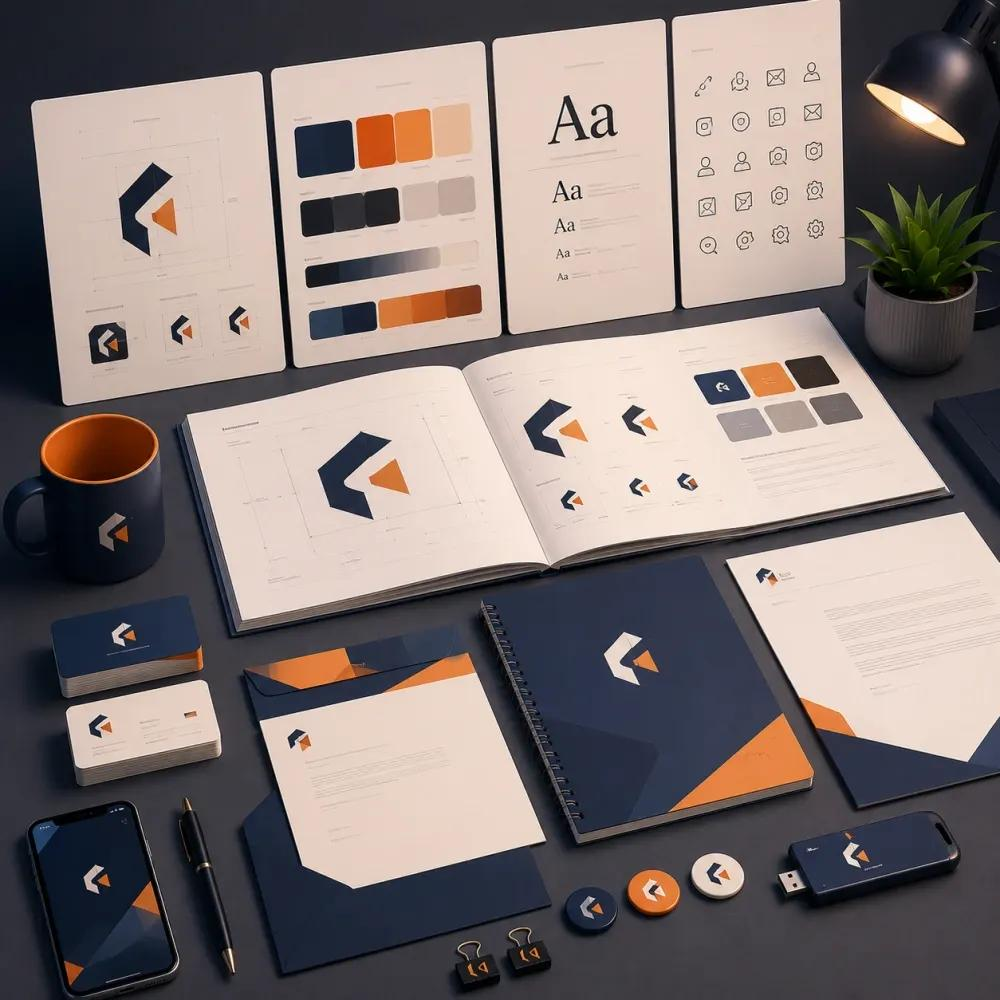
Professional brand identity design in Kenya is an important investment for businesses looking to establish a recognisable presence, attract customers and compete effectively in 2026. Whether you are launching a startup, managing an established company or introducing a new product to the market, the way your business presents itself influences how potential customers perceive it. From your company logo and colours to your website, business stationery, signage and marketing materials, every visual element contributes to the impression people form about your organisation.
However, creating a professional business identity involves much more than choosing attractive colours and commissioning a logo. It requires a proper understanding of your business, its target audience, its competitors and the qualities you want customers to associate with your company. These elements must then be translated into a coordinated visual system that can be applied consistently across your marketing and business communication materials.
In Kenya, where businesses operate across increasingly competitive industries, having a recognisable visual identity can help distinguish your company from others offering similar products and services. A properly developed brand identity design system also gives employees, designers, printers and marketing agencies a common reference when producing materials on behalf of your organisation. This guide explains what the process involves, how much you should budget in 2026 and what to consider when choosing a professional design agency.
What Is Brand Identity Design?
Brand identity design is the process of developing the visual elements through which a business presents itself to customers, employees, suppliers and other stakeholders. It establishes how an organisation should look and provides a consistent visual language for communicating its values, personality and market position. Rather than treating every marketing material as a separate design assignment, a complete identity system connects the company’s visual elements so that they work together across different platforms.
A professional identity typically includes a logo, colour palette, typography, supporting graphics, imagery direction and guidelines explaining how these elements should be used. Depending on the company’s requirements, the work may also extend to business cards, letterheads, company profiles, product packaging, uniforms, vehicle graphics, signage and digital marketing templates. These materials should share identifiable design characteristics instead of appearing as unrelated products created at different times.
It is also important to understand that branding and visual identity are related but different concepts. Branding is the broader process of shaping how people perceive and experience a business through its products, services, reputation, customer experience and communication. Brand identity design focuses on the visual system used to express that broader brand, giving the organisation a recognisable appearance across its customer interactions.
For example, a company that wants to be recognised as a dependable provider of professional services needs an identity that supports this positioning. Its logo, colours, typography and communication materials should work together to convey the desired impression. Customers should encounter a consistent presentation when visiting the company’s website, reading its company profile, receiving a quotation or visiting its premises. This consistency makes the business easier to recognise and helps establish a more organised professional image.
Why Brand Identity Design Matters for Kenyan Businesses in 2026
Kenyan businesses operate in competitive markets where customers frequently encounter several companies offering similar products and services. Whether someone is looking for a construction contractor, property developer, technology provider, restaurant or professional consultancy, they are likely to compare different businesses before deciding which one deserves their attention. A company’s presentation can influence whether potential customers take the time to understand its services and consider engaging it.
Customers also encounter businesses through several channels, including Google searches, social media advertisements, referrals, printed brochures, company profiles and physical premises. These interactions contribute to the impression customers form about an organisation, making consistency an important part of business communication. Professional brand identity design helps connect these different interactions by providing a common visual direction that can be maintained across the company’s marketing and operational materials.
Building Recognition and Familiarity
Recognition develops when customers repeatedly encounter consistent visual elements associated with a particular business. A distinctive logo, recognisable colour palette, typography system and supporting graphics make it easier for people to associate different advertisements and communication materials with the same organisation. This familiarity becomes increasingly useful as a business invests in marketing, introduces new services or expands into additional locations.
Consider a company whose website uses one colour scheme, its social media pages use another and its printed company profile features a completely different logo arrangement. Even when all these materials contain the correct company name, the lack of visual consistency can weaken recognition. A coordinated identity system connects these materials and makes the business easier to identify, regardless of where customers encounter it.
Creating a Professional Business Image
A company’s visual presentation often influences the expectations people form about its products, services and operational standards. An outdated logo, poorly designed company profile or inconsistent quotation template may create an impression that does not reflect the actual quality of the business. Professionally developed design materials can help communicate organisation, attention to detail and confidence when engaging prospective customers, corporate clients and business partners.
This is particularly important for businesses approaching institutional organisations, investors, suppliers and corporate customers. These audiences may review company profiles, presentations, proposals and websites before deciding whether to engage a service provider. A consistent visual identity helps ensure that the company’s materials communicate its capabilities clearly and present a coherent image. Although good design cannot replace service quality or business performance, it can ensure that the company’s presentation supports rather than undermines its reputation.
Supporting Marketing and Business Communication
As a business grows, it usually produces more materials for advertising, customer engagement and internal communication. Social media campaigns, brochures, presentations, email signatures, promotional merchandise and printed stationery all require design decisions that can become difficult to manage without an established identity. When every material is developed independently, differences in colours, typography and layouts can gradually make the company appear inconsistent.
A documented brand identity design system provides designers and marketing teams with a common reference when producing new materials. Instead of repeatedly deciding which colours, fonts and graphic elements to use, they can work within an established visual framework. This is especially useful when a business engages different suppliers for printing, website development, signage and promotional materials because each provider can follow the same design guidelines.
Differentiating Your Business From Competitors
Businesses operating in the same industry frequently offer similar services and communicate comparable promises to their customers. A distinctive visual identity helps establish a recognisable market presence by translating the company’s positioning and personality into design elements that customers can associate with its name. The objective is not simply to make the business look different from its competitors, but to communicate its character in a way that makes sense to its intended audience.
For example, a construction company may want to communicate technical competence, reliability and experience through a structured and professional visual system. A hospitality business targeting leisure travellers may require a warmer and more expressive presentation that reflects the experience it offers. Both companies need professional design, but their identities should communicate different qualities because their markets, customers and business objectives are not the same.
Providing a Foundation for Business Growth
A business that initially requires only a logo may eventually need vehicle branding, office signage, staff uniforms, company profiles, product packaging and additional marketing materials. Without an established visual system, producing these materials can become a fragmented process in which every new design introduces different colours, layouts or interpretations of the original logo. This creates unnecessary inconsistencies as the company expands its communication activities.
A properly developed brand identity design system provides a framework that can accommodate new requirements without losing the visual characteristics customers already associate with the business. New materials can be developed using approved colours, typography, graphics and guidelines, allowing the organisation to maintain continuity as it grows. This makes professional identity development useful not only for businesses launching today, but also for established organisations preparing for future expansion.
Brand Identity Design Prices in Kenya: What to Budget in 2026
The cost of brand identity design in Kenya depends on the amount of work involved, the experience of the design provider and the number of materials required. A startup commissioning its first logo will have different requirements from an established organisation seeking a complete identity system supported by research, brand guidelines and multiple business applications. Understanding these differences helps businesses prepare realistic budgets and evaluate quotations according to the services being offered.
For a logo and basic identity package, businesses can use an estimated budget of KES 15,000 to KES 35,000. At this level, the project would typically cover the primary logo, a defined colour palette, typography selection and basic instructions on how the identity should be used. This is generally suitable for smaller businesses that need a professional starting point without commissioning an extensive corporate identity project.
A full brand identity design system may cost approximately KES 50,000 to KES 120,000, depending on the number of applications and the level of documentation required. Such a project may include different logo variations, comprehensive brand guidelines, corporate stationery and selected digital templates. This option is more suitable for businesses that already have several communication requirements or expect to expand their marketing activities and need a consistent system that different designers and suppliers can follow.
Businesses requiring more extensive strategic work may need to budget between KES 100,000 and KES 250,000 for brand strategy and complete identity development. These projects can include research, market positioning, messaging, brand personality and the development of a comprehensive visual system. They are particularly relevant to established companies, organisations entering new markets and businesses undertaking significant changes to their corporate direction.
A brand refresh, which focuses on improving an existing identity rather than replacing it entirely, may cost between KES 40,000 and KES 100,000. The work can involve updating the logo, refining typography, adjusting colours and introducing more consistent design applications while preserving elements customers already recognise. This approach is useful when an established identity needs modernisation but the business does not want to discard the recognition it has developed over time.
These figures are indicative budgeting estimates for 2026 rather than fixed prices applicable to every design provider. The final quotation will depend on the complexity of the assignment, the number of deliverables, research requirements and the terms agreed with the agency. Before approving a project, businesses should request a detailed breakdown of the work included so that they understand exactly what they are paying for. Companies considering a professional identity project can also explore Design Corner’s brand identity services to discuss their requirements and request a quotation.
What Determines the Cost of Brand Identity Design in Kenya?
Two businesses may approach a design agency requesting what appears to be the same service but receive significantly different quotations. This usually happens because the actual work differs in research requirements, design complexity, the number of materials involved and the time needed to complete the project. Comparing prices without understanding these differences can lead to misunderstandings about the quality and completeness of the final deliverables.
The Scope of Work and Required Deliverables
The scope of work is one of the most significant factors influencing a project’s cost because it determines how much design and production work the provider must complete. A project involving only a logo and basic colour palette requires fewer deliverables than a comprehensive identity system covering stationery, packaging, signage, uniforms and digital marketing materials. The larger the number of applications, the more time is needed to ensure that the identity works correctly in each environment.
Businesses should establish their requirements before requesting quotations so that providers can estimate the work accurately. A detailed scope also makes it easier to compare proposals because each agency can be assessed against the same requirements. This prevents situations where one quotation appears cheaper simply because it excludes materials that another provider has included in its package.
Research and Brand Strategy Requirements
Some projects require more than a basic understanding of the company’s products, services and customers. An established organisation may need its competitors reviewed, existing market position assessed and customer expectations examined before the visual direction is developed. This research helps establish a stronger foundation for design decisions, particularly when the business is entering a new market or attempting to change how customers perceive it.
Strategic work may involve stakeholder discussions, competitor analysis, customer research and the development of brand positioning and messaging. These activities require additional time and expertise, which can increase the overall project cost. However, they also help reduce the risk of developing an attractive identity that fails to represent the business or connect with its intended audience.
The Number of Design Applications
A company’s identity may need to appear across several physical and digital environments, and each application introduces different design requirements. A logo intended for a website may need adjustments before it can be reproduced on a large outdoor sign, vehicle graphic, uniform, packaging or promotional material. The designer must consider dimensions, visibility, colour reproduction and the practical limitations of the materials being used.
A business requesting only a logo and business cards will therefore have different requirements from one that also needs company profiles, social media templates, office signage and branded merchandise. These additional applications increase the amount of work involved and should be reflected in the final quotation. Businesses should identify both their immediate and anticipated requirements early enough to avoid commissioning an identity that is difficult or expensive to extend later.
Experience and Structure of the Design Provider
The type of provider a business engages can also affect the quotation. Freelance designers, independent studios and established creative agencies may have different pricing structures depending on their experience, resources, processes and range of services. An independent designer may be appropriate for a straightforward identity assignment, while a larger project involving research, graphic design, website development, printing and signage may benefit from an agency with a team capable of coordinating these requirements.
The most suitable provider should be selected according to the complexity of the project and the expertise required rather than price or company size alone. Businesses should examine previous work, understand the provider’s design process and establish whether it can deliver the complete scope of the assignment. A clear understanding of responsibilities also makes it easier to manage communication and approvals throughout the project.
Project Timeline and Revision Requirements
Professional identity development requires time for understanding the business, exploring design concepts, presenting options, receiving feedback and refining the selected direction. When a project has an unusually short deadline, the provider may need to reorganise existing work or allocate additional resources, which can affect the quotation. It is therefore important to agree on a realistic schedule that allows the different stages to be completed without compromising the quality of the work.
The number of concepts and revision rounds should also be documented before the project begins. Businesses need to understand how many initial directions will be presented, what constitutes a revision and how additional changes will be charged. Clear terms make the design process easier to manage and prevent the assignment from repeatedly changing direction without an agreed scope.
How the Brand Identity Design Process Works
A professional identity project should follow an organised process in which business understanding informs strategy, strategy informs design and the approved design is translated into practical business materials. Although individual agencies may organise their workflows differently, the essential stages generally involve discovery, strategic development, visual design, application, documentation and final delivery. Understanding this process helps business owners assess the quality of a provider’s approach and know what to expect before committing to a project.
1. Brand Discovery and Business Understanding
The process begins by establishing what the business does, the products or services it offers, the customers it serves and the reasons it needs a new or improved identity. The designer should also understand the company’s objectives, competitors, existing reputation and the impression it wants to create in the market. This stage may involve stakeholder discussions, questionnaires, reviewing existing materials and examining how similar businesses present themselves.
A thorough discovery process helps identify the practical requirements of the assignment before design work begins. For example, a company may require an identity that can be applied to both digital platforms and physical signage, while another may be focused on packaging and retail presentation. Understanding these requirements early helps prevent unnecessary changes and ensures that the proposed identity is suitable for the company’s actual operations.
2. Brand Strategy and Positioning
Once the business requirements have been established, the next stage is defining the direction the identity should communicate. This involves understanding the company’s market position, personality, values and key messages, together with the qualities it wants customers to associate with its name. These decisions provide a strategic foundation for the visual work and help the design team understand what the identity needs to achieve.
Different businesses require different approaches because their audiences and competitive environments are not the same. A financial services provider may need to communicate reliability, clarity and professional expertise, while a lifestyle retailer may prioritise creativity, accessibility and a more expressive personality. Establishing these differences before designing the visual elements helps ensure that the final identity is appropriate for the business rather than simply following popular design trends.
3. Logo and Visual Identity Development
The agreed strategy is translated into visual concepts that communicate the business’s identity. This stage involves exploring logo structures, colour combinations, typography and supporting graphic elements before selecting and refining a suitable direction. Each proposed concept should have a clear design rationale connected to the business requirements rather than being presented as an arbitrary collection of shapes, colours and fonts.
A professional logo must also function effectively across different environments. It may appear on a website, business card, company vehicle, uniform, packaging or large outdoor sign, which means the designer needs to consider its legibility, proportions and adaptability. The final visual system should be distinctive and appropriate for the intended audience while remaining practical enough for the business to use consistently.
4. Development of Business and Marketing Applications
After the main identity has been approved, the design team can begin applying it to the materials required by the business. These applications demonstrate how the identity works in actual business communication rather than only as a logo displayed on a presentation screen. Depending on the project, the work may include stationery, company profiles, email signatures, social media templates, brochures, presentations, uniforms, packaging and signage.
Each application should follow the established visual system while adapting to its particular purpose. For example, a company profile needs to communicate information clearly across multiple pages, while a vehicle graphic must remain recognisable from a distance and work within the available space. Considering these practical requirements helps ensure that the finished identity is useful rather than simply attractive in a design presentation.
5. Brand Guidelines and Design Documentation
A complete identity should be accompanied by a document explaining how its elements are expected to be used. Brand guidelines provide a reference for employees, designers, printers, marketing agencies and other suppliers who may produce materials on behalf of the company. Without this documentation, different people may interpret the approved designs differently, gradually introducing inconsistencies into the company’s visual presentation.
The guidelines generally cover logo variations, colour specifications, typography, spacing requirements, minimum logo sizes and appropriate background treatments. They may also include examples of incorrect usage and sample applications demonstrating how the identity should appear across different materials. For a business working with several suppliers or an internal marketing team, this document becomes an important tool for maintaining consistency over time.
6. Final Delivery and Brand Rollout
The final stage involves preparing and handing over the approved artwork and supporting documents in the formats agreed upon during the project. Businesses should confirm that they receive files suitable for digital applications and professional printing, especially where the identity will be used on large signs, vehicle graphics, packaging or other physical materials. The handover should also include the agreed brand guidelines and any templates or additional applications covered in the quotation.
Arrangements concerning editable source files, ownership, licensing and future modifications should be clearly documented before the project is considered complete. Once the materials have been approved and delivered, the business can begin applying the identity across its communication channels. A coordinated rollout helps reduce inconsistencies between old and new materials while giving employees, suppliers and customers a clearer understanding of the updated visual presentation.
How to Choose the Right Brand Identity Design Agency in Kenya
Choosing a creative agency is an important decision because the provider influences both the quality of the finished designs and how effectively they address the company’s business requirements. An attractive portfolio is useful, but it does not automatically demonstrate that an agency can manage a complete identity project, understand commercial objectives or provide the documentation needed for consistent implementation. Businesses should therefore evaluate the provider’s experience, design process, project scope and ability to deliver the materials they actually require.
Examine Previous Projects and Portfolio Quality
A portfolio gives you an opportunity to assess the agency’s design quality, creative approach and experience across different industries. Rather than looking only at attractive logo images, examine how complete identity projects have been developed and applied to actual business materials. Look for examples showing the relationship between the p